
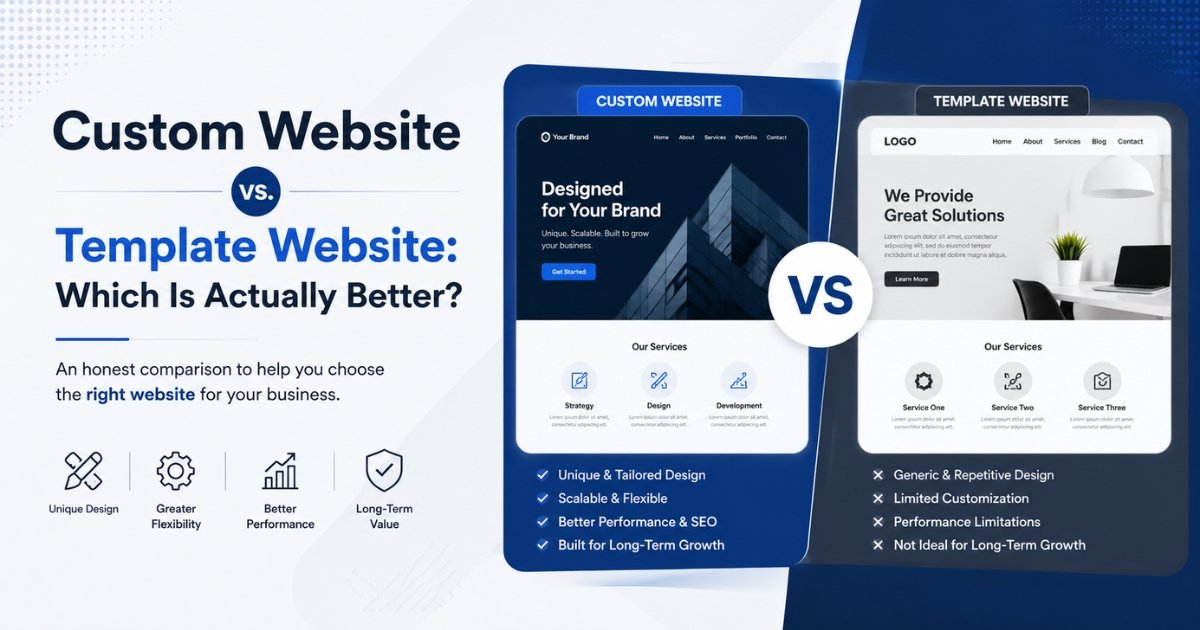
It’s one of the first real decisions any business faces when building a website: pick a ready-made template, or invest in something built from scratch. At XPO Outdoors, we help businesses choose the right website design and development approach based on their industry, goals, and future growth. Here’s an honest comparison to help you decide which option is best for your business.
What a Template Website Actually Is
A template website starts from a pre-built design; you select a layout, swap in your logo and content, and you’re live within days. Platforms like Shopify are a good example of this approach in action: Shopify website design relies heavily on pre-built themes that thousands of other stores are also using, customized with your branding and product catalog on top.
Templates exist because they solve a real problem: speed and cost. For a small business that needs a functional website fast, without a large budget, a template can genuinely be the right call.
What a Custom Website Actually Is
A custom build starts with your business, not a pre-made layout. Every element, structure, functionality, and design is built specifically around what you actually need, rather than adapted from something built for a generic use case. This is the foundation of proper custom website development services: nothing is included because “that’s just how the template works”; it’s there because it serves a specific purpose for your business.
Where the Real Differences Show Up
Design Flexibility
Templates are inherently limited by what the theme’s original developer built. You can change colors and swap images, but the underlying structure stays the same as every other business using that template. A custom build has no such ceiling; the design serves your brand and your users, not the constraints of a pre-made framework.
Performance and SEO
This is where the gap often matters most. Templates, especially ones loaded with features you’ll never use, tend to carry bloated code that slows load times. A thoughtful approach to seo website design means building only what’s actually needed, which directly affects how fast a site loads and how well it ranks. This is a common issue with ecommerce website development on template platforms, hundreds of unused theme features sitting in the background, quietly working against site speed.
Scalability
A template that fits your business at launch might not fit it two years later. As you add functionality, custom integrations, or specific workflows, you either find a plugin that half-solves the problem, or you eventually rebuild anyway. A custom foundation is built to grow with the business from day one, which tends to be more cost-effective over a multi-year timeline, even with a higher starting cost.
Cost, Short-Term vs. Long-Term
Templates almost always win on upfront cost. But the real comparison isn’t the initial invoice; it’s the total cost over the life of the site: ongoing plugin conflicts, limitations that require workarounds, and the eventual rebuild many template-based sites need once they outgrow their original setup.
Where This Gets Specific: B2B and Corporate Sites
For a b2b website development project, the stakes are usually different than for a small local business site. B2B buyers research extensively before ever reaching out, and a generic-feeling template can quietly undercut credibility during that research phase. Corporate website design, in particular, often needs to reflect a level of polish and specificity that a shared template structure simply can’t offer, since the same theme is likely powering competitor sites too.
The same logic applies to ecommerce. Shopify website development is a completely reasonable choice for a straightforward store, but a business with complex product logic, unique checkout requirements, or ambitious growth plans often outgrows what a theme-based platform can support.
So, Which Should You Choose?
If you need something functional fast, on a tight budget, for a simple use case, a template is a legitimate choice, not a compromise. But if your business depends on standing out, converting serious B2B buyers, or scaling without hitting a wall in two years, proper website design and development services built around your actual needs tend to pay for themselves over time.
Talk to a Team That Builds Both
Whether you’re leaning toward a fast template launch or a fully custom build, it helps to talk it through with a team that isn’t just trying to sell you one option. If you’re searching for a website design company near me and want an honest read on which direction actually fits your business, we’re happy to walk through it with you, no pressure toward the more expensive option just because it’s more expensive.
Frequently Asked Questions
Is a template website ever the right long-term choice?
For simple, low-complexity sites with limited growth plans, yes. The issue usually isn’t the template itself; it’s outgrowing it without a plan for what comes next.
How much more expensive is a custom website?
It varies widely by scope, but the more useful comparison is total cost over 2 to 3 years, not just the initial build, since templates often require workarounds or a rebuild down the line.
Can a Shopify store ever be considered “custom”?
To a degree. Heavy customization of a Shopify theme can get you partway there, but it’s still built on a shared underlying structure, which is different from a fully custom ecommerce build.
Does a custom website actually help with SEO?
Generally yes, since you control exactly what code loads on the site, without the bloat that comes bundled in many templates, which directly affects site speed and rankings.
How do I know which option is right for my business?
It mainly comes down to complexity, growth plans, and how much your website needs to differentiate you from competitors using similar templates.