
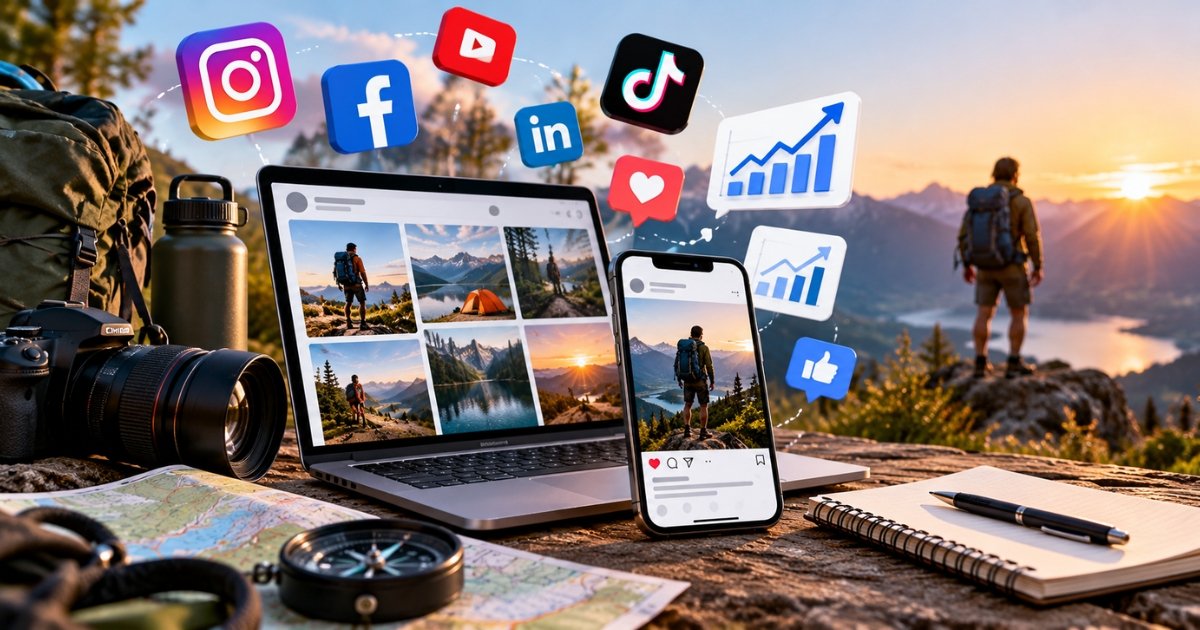
Social platforms change constantly. The outdoors doesn’t.
A sunrise on a mountain ridge still draws people outside, and campers still want equipment they can rely on when conditions change. What’s different is how those people discover products, compare options, and decide which brands deserve their attention.
The social media marketing trends of 2026 reflect that shift. New tools are changing how brands create content and reach customers, but genuine experiences still matter.
For outdoor brands, the challenge is finding a balance between new technology and real-world credibility. Buyers want to see how gear works, hear from people who have used it, and get clear answers before spending their money.
This guide covers four trends shaping social media in 2026 and practical ways XPO Outdoors can apply them.
Social Media Marketing Trends 2026 for Outdoor Brands
The latest social media trends 2026 show growing attention to transparency, convenient shopping, smaller communities, and searchable content.
Not every trend will suit every outdoor business. The goal is to identify the opportunities that match your audience and available resources.
1. AI Personalization and the Demand for Authentic Content
Artificial intelligence now plays a role in content recommendations, writing assistance, reporting, and video production.
For brands, that can make some marketing tasks easier. But customers also want to know whether the content they see reflects real products and experiences.
A Clutch survey of 601 US consumers conducted in August 2026 found that 53% were less likely to purchase from brands they knew used AI in social media content. Nearly 90% also considered disclosure of AI-generated social content important.
These findings don’t mean businesses should avoid AI entirely.
They suggest that brands need to consider how they use it and whether the content gives customers an accurate picture.
Research discussed by Sprout Social also found that 55% of surveyed social users were more likely to trust brands publishing human-generated content.
For outdoor brands, this distinction matters.
A real demonstration of a backpack on a hiking trail tells customers something that an entirely artificial product scene may not.
People can see the straps, pockets, fit, and how the product is carried.
The same applies to camping equipment, outdoor clothing, and accessories.
What XPO Outdoors can do:
- Share genuine field videos showing products in appropriate outdoor conditions.
- Use AI to support planning, caption drafts, reporting, and other suitable tasks.
- Clearly identify materially AI-generated content and follow platform disclosure requirements.
- Explain actual product features and limitations instead of relying on unrealistic promotional claims.
AI can support content creation, but it shouldn’t replace the real information customers need before purchasing outdoor products.
Authentic content is only one part of earning customer confidence. Learn more about how social media builds brand trust through genuine customer experiences, transparent communication, and meaningful engagement.
2. Social Commerce and Interactive Shopping
Social media is becoming a place where people do more than discover products.
They can watch demonstrations, explore product details, ask questions, and, on supported platforms, complete purchases.
EMARKETER projected that US social commerce sales would exceed $100 billion in 2026. It also forecast that more than half of US social buyers would make purchases through TikTok during the year, using a definition that includes purchases influenced by or made through the platform, not only TikTok Shop checkout.
For outdoor brands, this creates opportunities to connect product education with shopping.
A short video can demonstrate how a piece of camping equipment works.
A live session can give viewers the chance to ask questions about size, weight, materials, or appropriate uses.
Where supported, product links and shopping features can help interested viewers find the item being demonstrated.
Interactive experiences may also be useful for certain products.
For example, augmented reality can help customers visualize the size or appearance of compatible items, although it cannot replace physical testing of product fit or performance.
What XPO Outdoors can do:
- Host live product demonstrations and answer practical customer questions.
- Add relevant product links to eligible videos and social media posts.
- Explain dimensions, features, and limitations clearly during demonstrations.
- Explore interactive product previews when the technology genuinely helps customers evaluate an item.
Not every outdoor brand needs live shopping or augmented reality.
Start with the features your customers will actually use and confirm which shopping tools are available in your market.
3. Community-First Marketing and Smaller Social Spaces
Large public feeds can introduce people to a brand, but smaller communities offer a different experience.
Private groups, broadcast channels, and activity-focused discussions allow members to connect around shared interests.
According to Socialinsider’s 2026 social media trends report, private communities are becoming an important part of how brands create more focused conversations with their audiences.
For outdoor enthusiasts, these communities can be especially relevant.
Hikers share route experiences. Campers ask about equipment. Customers discuss what worked for them during particular trips.
Those conversations can help a brand understand what people need.
A community focused on camping, for example, may reveal common questions about shelter setup, equipment storage, or packing for changing weather.
Businesses can use those questions to create more useful posts and improve product information.
However, communities need a reason to exist beyond constant promotion.
People are more likely to participate when conversations provide practical value.
What XPO Outdoors can do:
- Create an activity-focused group or channel when there is genuine audience interest.
- Share product updates, care advice, and useful outdoor information.
- Invite members to discuss their experiences and ask questions.
- Encourage customers to share their adventures with appropriate permission.
- Use recurring questions to guide future educational content.
The goal isn’t to build the largest possible group.
It’s to create a space where members find the information and conversations useful enough to return.
4. Social Search and Creator Recommendations
People increasingly use social platforms to find information, not just entertainment.
Someone planning a camping trip might search for tent setup advice on YouTube or TikTok.
A beginner hiker may look for backpack fitting demonstrations or equipment checklists on Instagram.
This growing emphasis on discovery is one of the latest social media trends in 2026 that outdoor brands should pay attention to.
Socialinsider identifies social search as an important trend, with brands encouraged to make content easier to discover through relevant topics and clear descriptions.
For XPO Outdoors, that means thinking about the questions customers ask before creating videos and captions.
Instead of publishing a post with a vague headline such as “Adventure Starts Here,” a more descriptive topic might be:
“How to Choose the Right Backpack for a Weekend Hike.”
The second topic gives viewers a clearer understanding of what they’ll learn.
Search-friendly content can include relevant spoken explanations, captions, descriptive titles, and accurate on-screen text.
Creator partnerships can also support product discovery.
For outdoor products, people may find detailed field demonstrations especially useful because they show equipment in real conditions.
However, creator content should be accurate and any material relationships or sponsorships must be disclosed appropriately.
What XPO Outdoors can do:
- Create posts around real customer questions.
- Use descriptive video titles and natural keywords in captions.
- Explain product features clearly during demonstrations.
- Work with relevant outdoor creators when their audience and experience fit the product.
- Encourage realistic reviews that include both benefits and limitations.
A creator with a smaller but engaged outdoor audience may provide more relevant exposure than a popular account whose followers have little interest in camping or hiking.
Choose partnerships for their audience fit and credibility, not follower counts alone.
Keeping up with changing social media trends takes time, especially when you’re managing content, engagement, and campaigns alongside your daily business operations. Professional social media marketing services can help businesses build a consistent strategy, manage their social presence, and focus on reaching the right audience.
How Outdoor Brands Can Put These Trends Into Practice
Following every new social media feature isn’t necessary.
A more useful approach is to choose a trend, test it, and review the outcome.
Start by identifying your main goal.
Do you want more people to discover your products? Are you trying to encourage website visits, answer customer questions, or increase relevant sales?
Then choose one activity that supports that objective.
For example, an outdoor brand could test a series of short product demonstration videos over four weeks.
During that period, it could compare viewer retention, product page visits, customer questions, and any attributable conversions.
Another business might focus on community engagement by hosting regular discussions around equipment care and outdoor preparation.
Review the results before expanding the activity.
A trend becomes useful when it helps your business connect with the right audience, not simply because other brands are adopting it.
Frequently Asked Questions About Social Media Marketing Trends 2026
1. What are the biggest social media marketing trends in 2026?
Four important trends include growing attention to AI transparency and authentic content, social commerce, smaller digital communities, and social search.
Their value depends on the business, audience, and platforms involved.
2. Which social media platforms matter most for outdoor brands?
Instagram, YouTube, TikTok, and Facebook can all provide opportunities for outdoor brands, particularly through videos, customer experiences, and community discussions.
However, the most suitable platform depends on where your customers spend time and what type of content they find useful.
Start with channels you can manage consistently.
3. Should outdoor brands use AI to create content in 2026?
AI can help with content planning, editing assistance, reporting, and other marketing tasks.
Brands should still ensure that product demonstrations, customer experiences, and performance claims are accurate.
When using materially AI-generated content, follow applicable platform disclosure requirements and avoid misleading viewers.
4. How does social search change content creation for outdoor brands?
Social search encourages brands to create content that answers specific questions.
Relevant titles, captions, spoken explanations, and on-screen text can help viewers understand a post and may support discoverability.
Focus on useful topics rather than repeating keywords unnaturally.
5. How can a small outdoor brand start building a social media community?
Choose one platform where your target audience is already active.
Start with useful discussions, product-related questions, and genuine customer experiences.
Respond consistently, listen to feedback, and review participation over time.
A smaller active community can still be valuable if members find the conversations relevant.
Put Social Media Marketing Trends 2026 to Work
Trust remains central to how outdoor customers evaluate brands.
People want useful product information, realistic demonstrations, and opportunities to hear from others who have used the equipment.
The social media marketing trends for 2026 offer new ways to deliver those experiences.
AI can support content workflows. Shopping features can make product discovery easier. Smaller communities create room for conversation, while social search helps people find information that answers their questions.
Start with one trend that fits your business.
Test it, review the results, and keep what works for your audience.
At XPO Outdoors, we recognize the importance of connecting outdoor products with the people who use them.
.