
Scroll through an outdoor brand’s social media feed, and you will notice a familiar pattern. Product photos, mountain views, discount codes, and promotional posts appear everywhere.
While these posts may look attractive, they often fail to engage potential customers.
Outdoor equipment sells on trust, product quality and real-world performance. Customers want to see how tents, backpacks and event equipment perform in practical situations.
However, many businesses make social media marketing mistakes that limit engagement, reduce website traffic and waste advertising budgets.
Poor content planning, inconsistent messaging and weak performance tracking can limit growth. A strong social media marketing strategy helps businesses reach the right audience and improve their results.
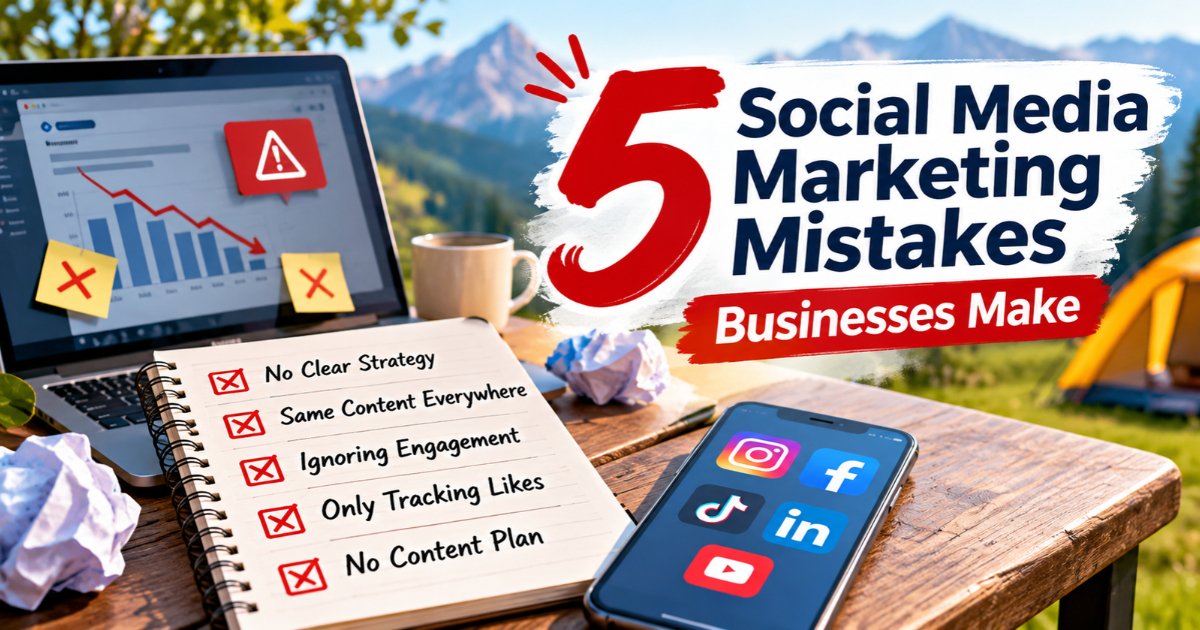
This guide explores five common social media mistakes that outdoor and lifestyle businesses should avoid. Each section explains the problem, why it matters and how to fix it.
5 Common Social Media Mistakes to Avoid
A successful social media strategy requires more than regular posting.
Brands need relevant content, audience engagement and clear business goals.
Here are five mistakes that can affect social media performance.
1. Posting Product Pictures Without a Story
The mistake: Sharing product photos with basic descriptions and prices.
Product photography helps customers understand what you sell. However, images alone may not explain why someone should choose your equipment.
Customers want to picture themselves using your products.
A tent photographed against a plain background shows its design. The same tent at a campsite helps customers imagine the experience.
Why it hurts growth
Generic product posts can struggle to attract attention in crowded social feeds.
Without context, potential buyers may overlook important product benefits.
This can lead to lower engagement and fewer website visits.
How to fix it
Show your equipment in real-world situations.
For example:
- Photograph tents during camping trips.
- Show canopies at outdoor events.
- Demonstrate backpacks on hiking trails.
- Share close-up images of useful product features.
- Include customer experiences with permission.
Use captions that explain how the product solves a specific problem.
Instead of listing features alone, connect them to practical benefits.
A strong product story gives customers a reason to engage and explore further.
2. Sharing the Same Content Across Every Platform
The mistake: Posting identical images, videos and captions on every social media channel.
Different platforms attract audiences with different expectations.
A video that performs well on Instagram may need a different format for LinkedIn.
Outdoor retail customers may enjoy product demonstrations, while B2B buyers often prefer practical case studies.
Why it hurts growth
Using the same approach everywhere can reduce relevance.
Customers may ignore content that does not match their interests or the platform they use.
Each social channel also has different content formats and engagement patterns.
How to fix it
Choose your priority platforms and adapt your content accordingly.
For example:
- Instagram: Share outdoor product photography, Reels and customer experiences.
- TikTok: Create short demonstrations, equipment tips and engaging videos.
- Facebook: Build community discussions and share product updates.
- LinkedIn: Publish B2B case studies, commercial equipment applications and industry insights.
You can reuse the same core idea across platforms.
However, adjust the format, caption and message to suit each audience.
This approach helps maintain consistent branding without making every post identical.
3. Ignoring Comments and Customer Messages
The mistake: Taking too long to respond to comments, enquiries and direct messages.
Social media is not simply a place to publish content. It also creates opportunities for customer communication.
Outdoor equipment buyers often have practical questions before purchasing.
They may ask about product dimensions, durability, delivery options or suitability for specific events.
Why it hurts growth
Slow responses can discourage potential customers.
Buyers may contact competitors if they cannot get the information they need.
Unanswered questions can also affect how people perceive your customer service.
How to fix it
Create a clear process for managing social media enquiries.
Start with these actions:
- Check messages regularly during business hours.
- Set realistic response-time targets.
- Prepare helpful answers to common questions.
- Respond professionally to negative feedback.
- Encourage customers to share their experiences.
- Request permission before publishing customer photos.
For example, aim to respond within four business hours when your team can consistently meet that target.
Quick, useful replies can build customer confidence and support purchasing decisions.
4. Measuring Likes Instead of Business Results
The mistake: Judging social media success only through likes, followers and comments.
Engagement metrics can help you understand audience interest.
However, they do not always show whether your content generates sales or enquiries.
A post may receive hundreds of likes without bringing visitors to your website.
Why it hurts growth
When businesses focus only on engagement, they may overlook more valuable results.
This makes it harder to understand which campaigns support revenue.
It can also lead to wasted advertising spend.
How to fix it
Measure social media performance against clear business goals.
Useful metrics include:
- Website visits from social media
- Product page views
- Enquiries and quote requests
- Conversion rate
- Cost per lead
- Revenue from social campaigns
- Return on advertising spend
Use UTM parameters to identify which platforms and campaigns generate website traffic.
For example:
?utm_source=instagram&utm_medium=social&utm_campaign=summer_gear
This tracking information helps analytics tools identify visits from a specific campaign.
Combine UTM tracking with Google Analytics 4 events and ecommerce data to assess conversions and revenue where appropriate.
Our guide on how to measure social media ROI explains how to evaluate campaign performance and connect marketing activity with business results.
5. Posting Without a Seasonal Content Plan
The mistake: Publishing social media content only when time allows.
Outdoor equipment demand often changes throughout the year.
Camping products, hiking accessories and event equipment can attract different audiences during different seasons.
Customers also research products before they need them.
Why it hurts growth
Last-minute content can miss important purchasing periods.
A business that starts promoting summer camping equipment too late may lose opportunities to competitors.
Inconsistent posting can also make it harder to maintain audience interest.
How to fix it
Build a content calendar around your products, customers and seasonal demand.
Start planning major campaigns six to eight weeks before relevant events or sales periods.
Include a mix of content:
- Product demonstrations
- Seasonal buying guides
- Behind-the-scenes updates
- Customer experiences
- Educational tips
- Event preparation ideas
- New product announcements
For example, promote camping equipment before the main summer buying season.
Share commercial canopy and event equipment content ahead of major outdoor events.
Review campaign performance regularly and adjust future content based on results.
A clear plan helps you publish useful content when customers are most likely to need it.
Frequently Asked Questions
What are the most common social media mistakes for outdoor brands?
Common mistakes include posting generic product images, ignoring customer messages, using identical content across platforms and focusing only on likes.
Poor seasonal planning can also limit visibility and sales opportunities.
Outdoor brands should prioritise useful content that answers customer questions and demonstrates products in real situations.
Which social media mistakes should small businesses fix first?
Start with customer communication and performance tracking.
Respond to enquiries promptly and make sure your social media links include appropriate tracking parameters.
These improvements can help you understand customer behaviour and identify opportunities for growth.
How often should an outdoor brand post on social media?
Posting frequency depends on your audience, resources and content quality.
Three to five posts per week can provide a starting point for some small businesses.
However, consistent, relevant content matters more than reaching a fixed posting target.
Review engagement and conversion data to determine what works for your audience.
Should B2B outdoor equipment brands use social media?
Yes. Social media can help B2B brands demonstrate their products and build relationships with potential buyers.
Event organisers, retailers and commercial customers may research suppliers through platforms such as LinkedIn, Facebook and Instagram.
Share case studies, event photography and practical product information to support their decisions.
How can I tell whether my social media strategy is working?
Start by defining your business goals.
Track website visits, customer enquiries, conversions and revenue where possible.
Use Google Analytics 4 and campaign tracking links to understand which channels generate meaningful results.
Compare performance over time rather than relying only on follower numbers.
Ready to Improve Your Social Media Approach?
Avoiding these social media mistakes can help outdoor brands build stronger customer relationships and make better marketing decisions.
Focus on useful product stories, platform-specific content, and timely customer communication.
Measure results beyond likes and followers. Plan campaigns around the seasons and events that matter to your customers.
Strong social media content should help buyers understand your products and feel confident about their purchasing decisions.
At XPO Outdoors, we understand the importance of reliable equipment for outdoor activities, commercial events, and retail businesses.
We supply outdoor gear for a range of applications, including events and B2B requirements.
Whether you are preparing for an outdoor event, sourcing equipment or exploring products for your business, contact XPO Outdoors to discuss your needs.