As an outdoor business owner, you will eventually reach a point where you want to grow your customer base through paid advertising. Whether you sell camping gear, operate guided tours, or manage an outdoor retail store, online advertising can help you reach potential customers.
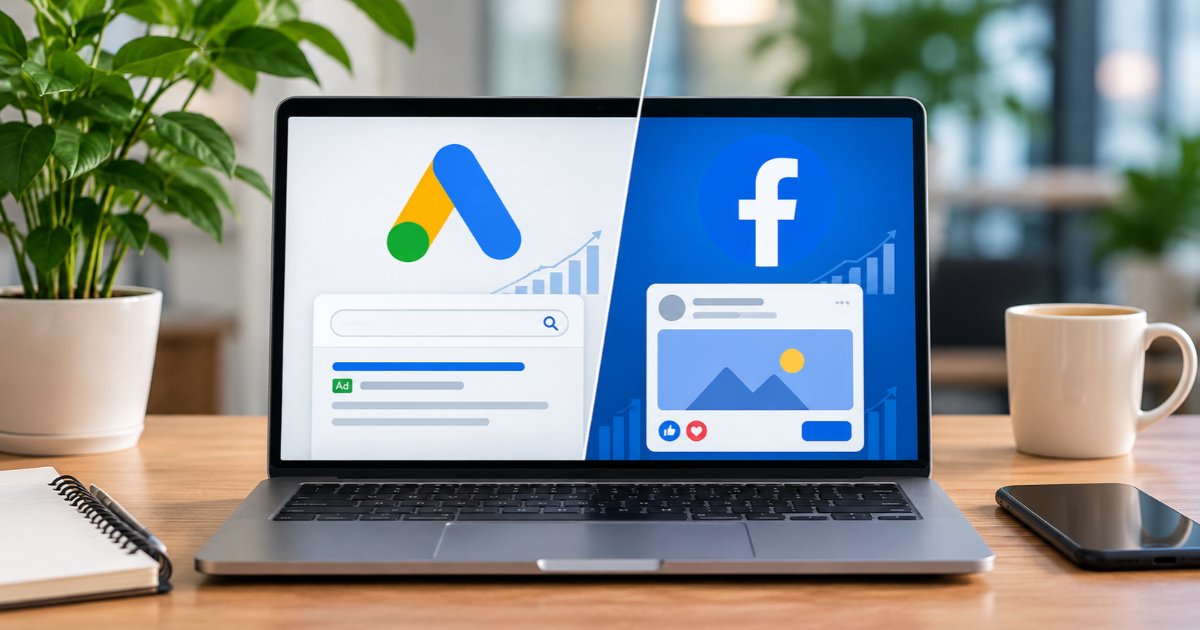
However, choosing between Google Ads vs Facebook Ads is not always straightforward.
Both platforms can drive product sales, generate enquiries, and increase bookings. But they reach customers in different ways, and choosing the wrong approach can quickly use up a limited advertising budget.
For outdoor brands, the right choice depends on your business goals, target audience, budget, and how customers discover your products or services.
This guide from XPO Outdoors compares Google Ads and Facebook Ads, including their costs, return on investment (ROI), targeting methods, and suitability for outdoor businesses.
Google Ads vs Facebook Ads: Intent vs. Interest
The biggest difference between Google Ads and Facebook Ads is how they help businesses reach potential customers.
Google Search Ads primarily target people actively searching for products or services. Facebook and Instagram Ads can introduce your business to people who may be interested in your products, even when they are not actively searching for them.
Understanding this difference can help you choose the right advertising platform.
Google Ads: Capture Existing Demand
Google Search Ads allow businesses to reach people who are already searching for specific products or services.
For example, someone searching for “best four-season tent” or “guided hiking tours near me” may already be researching options or preparing to make a purchase.
Your advertisement can appear when someone searches for relevant keywords, giving your business an opportunity to attract customers with existing interest.
For outdoor retailers selling tents, backpacks, and camping equipment, this can be particularly valuable.
Google also offers Shopping and other campaign types that can help businesses promote products through different advertising placements.
Facebook Ads: Build Awareness and Generate Interest
Facebook Ads, managed through Meta’s advertising platform, help businesses reach audiences across Facebook and Instagram.
These campaigns can use audience signals, automated targeting, and engaging visual content to introduce products and services to potential customers.
For example, a hiking tour company could promote a video showing mountain trails, guided experiences, and scenic destinations.
Someone watching the video may not have been planning to book a hiking tour, but the advertisement could encourage them to explore the experience.
Facebook and Instagram Ads can also generate direct sales and bookings through conversion-focused campaigns.
If you’re deciding which Meta platform deserves more of your advertising budget, our guide to Facebook Ads vs Instagram Ads explains how the two platforms compare for small businesses.
The key difference: Google Search Ads are particularly useful for capturing existing demand, while Facebook and Instagram Ads can help create interest, build awareness, and encourage purchases.
Google Ads vs Facebook Ads: Quick Comparison
Before choosing a platform, compare how each one supports your advertising goals.
| Feature | Google Search Ads | Facebook & Instagram Ads |
| Main strength | Capturing existing search demand | Building awareness and generating demand |
| Audience | People searching for relevant products or services | Audiences reached through targeting and delivery algorithms |
| Common ad formats | Text-based search ads | Images, videos, and carousel ads |
| Pricing | Often evaluated through cost per click | Often evaluated through cost per impression or result |
| Best for | High-intent searches, enquiries, and purchases | Visual products, experiences, awareness, and sales |
| Customer journey | Often reaches customers actively researching or buying | Can reach customers during discovery and purchasing |
| ROI | Depends on conversion performance and margins | Depends on conversion performance and margins |
Both platforms can be effective. The better option depends on where your customers are in their buying journey.
Google Ads vs Facebook Ads Cost: Which Is More Affordable?
When comparing Google Ads vs Facebook Ads cost, it is important to look beyond the price of individual clicks or impressions.
Advertising costs vary based on competition, audience targeting, location, campaign objectives, seasonality, and ad quality.
A platform with cheaper clicks does not necessarily generate cheaper sales.
Google Ads Costs
Google Search Ads commonly use cost-per-click (CPC) bidding, where advertisers may pay when someone clicks their advertisement.
The amount you pay depends on factors such as keyword competition, bidding strategy, and ad relevance.
For example, keywords related to popular camping equipment or guided outdoor experiences may become more competitive during peak travel and shopping seasons.
A higher click cost can still be worthwhile if the visitors are more likely to make a purchase.
Managing ad spend effectively requires more than choosing the right keywords. Our PPC management services help businesses improve campaign targeting, monitor conversions, and optimize advertising performance.
Facebook Ads Costs
Facebook and Instagram advertising often uses impression-based pricing, although campaigns can be optimized for different outcomes, such as traffic, leads, or sales.
Costs depend on the audience, campaign goal, competition, placement, and creative quality.
Outdoor businesses may benefit from visual advertisements featuring camping products, adventure experiences, or scenic destinations.
However, cheaper clicks do not guarantee more bookings or product sales.
The most important question is how much you spend to acquire a paying customer.
Budgeting Tips for Small Outdoor Brands
If you are working with a limited advertising budget, start with a focused approach.
- Set a manageable daily budget: Choose an amount your business can afford while gathering enough data to evaluate performance.
- Start with one primary campaign: Avoid spreading a small budget across too many campaigns.
- Use negative keywords on Google: Exclude irrelevant searches that are unlikely to generate customers.
- Track conversions: Measure purchases, qualified leads, or completed bookings rather than clicks alone.
- Review performance before increasing spend: Increase budgets based on sustainable results rather than impressions or traffic alone.
- Plan for seasonal demand: Adjust campaigns around camping seasons, holidays, and outdoor travel trends.
For example, a camping gear retailer may increase its advertising activity before the summer season, while a guided tour operator may focus on periods when customers typically book trips.
Google Ads vs Facebook Ads ROI for Small Businesses
Return on investment is one of the most important considerations when selecting an advertising platform.
However, Google Ads vs Facebook Ads ROI depends on your products, pricing, profit margins, customer behaviour, and campaign performance.
Neither platform guarantees better returns for every business.
Google Ads ROI: Reaching Customers Ready to Buy
Google Search Ads can perform well when potential customers already know what they are looking for.
For example, someone searching for a specific $400 camping tent may be comparing products and preparing to purchase.
A well-targeted advertisement can direct that customer to a relevant product page, increasing the opportunity to generate a sale.
For outdoor businesses selling established products or services with clear search demand, Google Search Ads can be a practical starting point.
However, results depend on keyword selection, competition, landing page quality, and conversion tracking.
Facebook Ads ROI: Building Awareness and Driving Sales
Facebook and Instagram Ads can help outdoor businesses attract new customers through engaging photographs, videos, and product demonstrations.
For example, a kayaking tour operator could advertise a short video showing the experience, customer testimonials, and available booking options.
This content may introduce the experience to people who have not yet searched for kayaking tours.
Facebook Ads can also support retargeting campaigns that reach people who previously interacted with your business, subject to applicable tracking and privacy requirements.
These campaigns may encourage potential customers to return and complete a purchase or booking.
However, awareness and engagement do not automatically translate into profitable sales.
How to Measure Advertising ROI
Instead of choosing a platform based on assumptions, track the results that matter to your business.
Important metrics include:
- Cost per click (CPC): How much you pay for each advertisement click.
- Cost per acquisition (CPA): The average advertising cost to generate a customer or desired conversion.
- Conversion rate: The percentage of visitors who complete a desired action.
- Return on ad spend (ROAS): Revenue generated compared with advertising expenditure.
- Return on investment (ROI): Profitability after accounting for relevant costs, not just advertising spend.
For example, if an outdoor retailer spends $500 on advertising and generates $2,000 in attributed sales revenue, its ROAS is 4:1.
However, that does not automatically mean the campaign is profitable. Product costs, fulfilment expenses, and other business costs must also be considered.
The best advertising platform is the one that generates valuable results at a sustainable cost.
Google Ads vs Facebook Ads for Small Business: Which Should You Choose?
There is no single winner when comparing Facebook Ads vs Google Ads.
The best platform depends on what you sell, your advertising objectives, and how customers make purchasing decisions.
Choose Google Ads If You Want to Capture Existing Demand
Google Search Ads may be a better starting point if:
- Customers regularly search for your products or services.
- You sell products with clear purchase intent, such as tents, kayaks, or hiking equipment.
- You want to generate enquiries from people actively researching outdoor services.
- Your website has relevant product or booking pages.
- You can track purchases, leads, or bookings accurately.
For example, a business offering guided hiking tours may use Google Search Ads to reach people searching for tours in a specific destination.
Choose Facebook Ads If You Want to Showcase Experiences
Facebook and Instagram Ads may be suitable if:
- Your products or services benefit from strong visual content.
- You want to introduce a new outdoor experience or product.
- Your audience may not actively search for your offer yet.
- You want to promote seasonal activities, events, or special offers.
- You have engaging photographs or videos that demonstrate your products.
For example, a guided adventure company could use short videos to introduce its experiences to potential customers.
For outdoor businesses looking to improve their reach and customer engagement, professional social media marketing services can help develop targeted campaigns and content strategies that support business growth.
Use Both Platforms If Your Budget Supports It
For some outdoor businesses, combining Google Ads and Facebook Ads can provide a broader marketing approach.
Facebook and Instagram campaigns can introduce your brand to new audiences, while Google Search campaigns can reach customers actively searching for related products or services.
Both platforms can also support remarketing or retargeting where appropriate.
However, running both platforms is not automatically the best choice.
If your budget is limited, focusing on one platform first may provide clearer performance data and help you avoid spreading resources too thin.
Test your campaigns, review results, and expand when your budget and performance justify it.
How to Test Google Ads and Facebook Ads With a Small Budget
You do not need to launch several campaigns immediately.
A simple testing process can help you understand which platform works better for your outdoor business.
Step 1: Define Your Advertising Goal
Decide what you want the campaign to achieve.
Your goal might be increasing online sales, generating qualified enquiries, or attracting bookings for guided outdoor activities.
Choose one main goal so you can evaluate performance clearly.
Step 2: Select the Most Suitable Platform
If customers are actively searching for your products, consider starting with Google Search Ads.
If your business sells visually appealing products or experiences that require discovery, consider Facebook and Instagram Ads.
Choose the platform that best matches your offer and available creative resources.
Step 3: Set a Realistic Testing Budget
A small outdoor business might consider an initial advertising budget of approximately 500–1,500 per month, depending on its financial capacity, market, and campaign objectives.
This is an illustrative budget, not a minimum platform requirement.
The budget should be large enough to gather useful information without creating unnecessary financial pressure.
Step 4: Track Results
Before launching, ensure that your website can measure relevant customer actions.
These may include completed purchases, booking enquiries, contact form submissions, or phone calls.
Review conversion tracking regularly to make sure the data is accurate.
Step 5: Evaluate and Improve
Allow sufficient time for your campaigns to collect meaningful data.
An initial review after 30 days can help identify issues, although campaigns with low conversion volumes may need longer to produce reliable conclusions.
Compare actual results against your advertising goals.
If one campaign generates profitable sales or qualified leads, consider gradually increasing its budget.
If performance is weak, review your targeting, advertisement creative, landing page, and offer before spending more.
FAQs About Google Ads vs Facebook Ads
1. Which Is Cheaper for a New Outdoor Startup?
Facebook and Instagram Ads may generate cheaper clicks in some campaigns, but this does not necessarily mean they deliver customers at a lower cost. When comparing Google Ads vs. Facebook Ads, focus on cost per acquisition, conversion rates, and profitability rather than click prices alone.
2. Can I Use Both Google Ads and Facebook Ads?
Yes. Many outdoor businesses can benefit from using both platforms. Google Search Ads can reach people actively searching for products or services, while Facebook and Instagram Ads can introduce your brand to new audiences and support retargeting. Track each platform separately to understand performance.
3. Which Platform Is Better for Quick E-Commerce Sales?
Google Search and Shopping campaigns can be effective when customers are actively searching for outdoor products. However, Facebook and Instagram Ads can also generate direct sales through engaging creative, product catalogues, and conversion-focused campaigns. The best option depends on your audience, products, and campaign performance.
4. How Much Should a Small Outdoor Business Spend on Advertising?
An initial testing budget of 500–1,500 per month may be reasonable for some businesses, depending on their goals, margins, and available resources. Start with an amount you can sustain and track conversions carefully before increasing spending.
5. Which Platform Is Better for Local Adventure Booking Services?
Both platforms can work. Google Search Ads can reach people looking for activities such as “guided hiking tours near me,” while Facebook and Instagram Ads can showcase experiences through photos and videos. Local adventure businesses should test which platform generates qualified enquiries and confirmed bookings at an acceptable cost.
Conclusion: Choose the Right Advertising Platform for Your Outdoor Business
Choosing between Google Ads and Facebook Ads comes down to your business goals, target audience, advertising budget, and customer buying journey.
Google Search Ads can help you reach people actively searching for outdoor products and services, while Facebook and Instagram Ads can help introduce your brand, build awareness, and generate sales through visual advertising.
Neither platform guarantees better results.
Start with clear goals, test campaigns carefully, and measure the cost of acquiring customers rather than focusing only on clicks or impressions.
At XPO Outdoors, we help outdoor businesses develop digital marketing strategies designed to reach the right audiences and support measurable growth.
Whether you operate an outdoor retail store, sell camping equipment, or manage guided adventure experiences, choosing the right advertising approach can help you make better use of your marketing budget.
Contact XPO Outdoors to discuss your advertising goals and explore the right paid advertising strategy for your business.