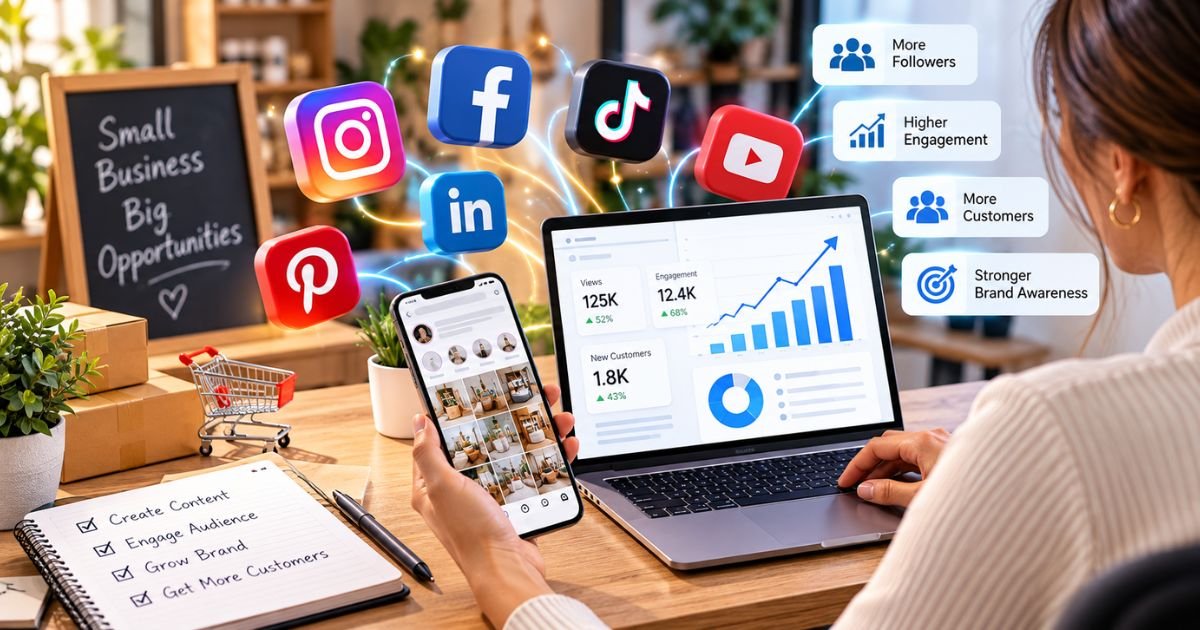
Posting on every platform and hoping the algorithm works in your favor is a losing strategy, and 2026 is the year to stop. AI Overviews now answer many searches before anyone clicks a link, short-form video keeps gaining ground, and the platforms reward real engagement, like comments and shares, over passive views. For a small business owner with limited time, that means choosing platforms carefully.
So how do you find the best social media platforms for small business growth? It depends on where your customers spend their time. Once you know that, two or three platforms will do most of the work.
Comparison Table: Best Social Media Platforms for Small Business in 2026
| Platform | Best For | Pros | Cons |
| Visual brands, e-commerce, lifestyle products | Built-in shopping tags, strong Reels reach, DMs convert well | Organic reach still requires consistent posting | |
| TikTok | Younger audiences, discovery-first brands | High organic reach, TikTok Shop, new U.S. joint venture adds stability | Content treadmill; trend cycles move fast |
| B2B services, consultants, professional brands | High-intent leads, low competition, strong for thought leadership | Slower growth curve; needs consistency | |
| YouTube Shorts | Tutorials, education, long-term SEO | Searchable and evergreen; can surface in Google search results | Takes longer to build momentum |
| Local businesses, community-driven brands | Active Groups and Marketplace, older audience with real buying power | Organic Page reach is limited | |
| Google Business Profile | Local and service-based businesses | Appears directly in local search results | Not a traditional social feed; limited content options |
Best Social Media Platforms for Small Business
Small businesses don’t need to be on every platform in 2026. They need to be on the right ones. AI-generated answers now handle a growing share of searches before a customer ever visits a website, and platforms increasingly reward genuine engagement over passive reach. The best social media platforms for small business growth are the ones where your actual customers already spend their time. Below is a breakdown of six platforms, who they work best for, and how to use them effectively.
Instagram remains one of the best social media platforms for small business brands that sell visually, combining product discovery and customer retention in one app.
- Who should use it? Visual brands, e-commerce stores, and lifestyle, retail, and outdoor product companies.
- What to do on the platform? Use product tagging and in-app shopping features. Post Reels for discovery and respond to DMs for retention. Collaborate with influencers and happy customers.
- How can businesses succeed? A high-end jewelry brand doesn’t need a big production budget or expensive influencer campaigns. Three short Reels a week showing the creation process, the products, and customer experiences, combined with fast DM replies, can deliver excellent results. An outdoor gear shop can do the same by showing products in real use on the trail or at the campsite.
TikTok
TikTok is a discovery engine, and an extremely powerful one. Since its U.S. operations moved to a new majority American-owned joint venture in January 2026, with plans to retrain its recommendation algorithm on U.S. user data, the platform has stabilized, making it worth considering for any business that hasn’t invested in it yet.
- Who should use it? Businesses with a recognizable brand voice, a younger audience, or a product that looks great on camera.
- What to do on the platform? Use TikTok Shop to sell directly in the app. Use popular audio with your own twist rather than copying trends exactly. Reply to comments with videos.
- How can businesses succeed? A local bakery doesn’t need to post every day. One process video a week, like showing how it makes its popular morning buns or prepares dough for cakes and cupcakes, can build a steady following.
Fewer small businesses post consistently on LinkedIn, which creates an opening for those in the B2B space.
- Who should use it? B2B businesses, service providers, and consultancies in particular.
- What to do on the platform? Post from a personal profile rather than a company page where possible. Use document-style carousel posts. Treat comments as a lead generation tool.
- How can businesses succeed? One post that clearly solves a specific problem your customers face is worth more than ten generic posts.
YouTube Shorts
YouTube Shorts continue to deliver in 2026 because they combine the evergreen value of long-form video with the discoverability of short-form content.
- Who should use it? Any business that teaches or explains something: home service contractors, trainers, and educators.
- What to do on the platform? Answer one specific question per video. Link to related long-form videos or your website. Write titles using the exact words customers search for, not internal jargon.
- How can businesses succeed? A single Short can answer a common customer question in under a minute while pointing viewers to a longer video or your website for more detail.
Facebook’s organic Page reach has dropped, but it’s still one of the best social media platforms for small business owners who serve a local community, thanks to Groups and Marketplace.
- Who should use it? Local businesses in particular, which can use Groups and Marketplace to share offerings and connect with customers.
- What to do on the platform? Put your effort into Groups rather than the main feed, list products on Marketplace, and create events.
- How can businesses succeed? A local business will often see better results in community Groups than on its own Page. Customers looking for local recommendations tend to ask in Groups first.
Google Business Profile
Google Business Profile isn’t a social network, but it’s essential for small businesses because it’s often the first place customers discover a local business.
- Who should use it? Every local and service-based business.
- What to do on the platform? Update it regularly, add photos, respond to reviews, and link to your website and booking system.
- How can businesses succeed? Treat every unanswered message or negative review as a customer service request, and respond within 48 hours.
How to Choose the Best Social Media Platforms for Small Business
A small business with a limited budget and no dedicated social media manager will struggle to post consistently across many platforms, and engagement will suffer. Instead, choose platforms based on their purpose. Pick one discovery-focused platform, such as Instagram or TikTok, and one retention-focused channel, such as a Facebook Group or email. If you serve a local area, always keep your Google Business Profile updated.
Conclusion
There’s no single list of the best social media platforms for small business that fits everyone. The right choice depends on your customers: where they spend time, what they care about, and how they buy.
Focus on two or three platforms instead of spreading thin across five or more. Pick one for discovery, one for retention, and keep your Google Business Profile updated if you serve a local area.
FAQs
1. What is the best social media platform for a small business in 2026?
There’s no universal answer. It depends on the business. E-commerce and visual brands tend to do best on Instagram or TikTok, B2B services do best on LinkedIn, and local businesses should prioritize Google Business Profile alongside Facebook Groups.
2. Do small businesses still need Facebook in 2026?
Yes, especially local businesses. Organic Page reach has dropped, but Facebook Groups and Marketplace remain active spaces where local customers search and buy.
3. Is TikTok still worth using for small businesses in 2026?
Yes. After its U.S. operations moved to a new American-majority joint venture in January 2026, the platform stabilized, and organic reach remains stronger there than on most other platforms.
4. How many social media platforms should a small business manage?
Two to three platforms, chosen based on where your customers already spend time, generally work better than spreading thin across five or more.
5. How has AI search changed small business social media strategy?
AI-powered search results increasingly draw on sources like Google Business Profiles, reviews, and video content. That makes accurate, updated, and searchable content on your profiles more valuable than ever.
XPO Outdoors Can Help
Knowing which platforms deserve your time is only half the work. The other half is building a presence that actually converts. XPO Outdoors helps outdoor companies, retail brands, and small businesses turn that knowledge into results, starting with a website built to support your Instagram and Facebook activity and Facebook and Instagram ad campaigns that reach the right audience. If you’re not sure where to start or which platform fits your budget, the XPO Outdoors team can help you figure it out and put a plan in motion.
Ready to grow your social presence? Contact XPO Outdoors today to build a website and advertising strategy that fits your business.