
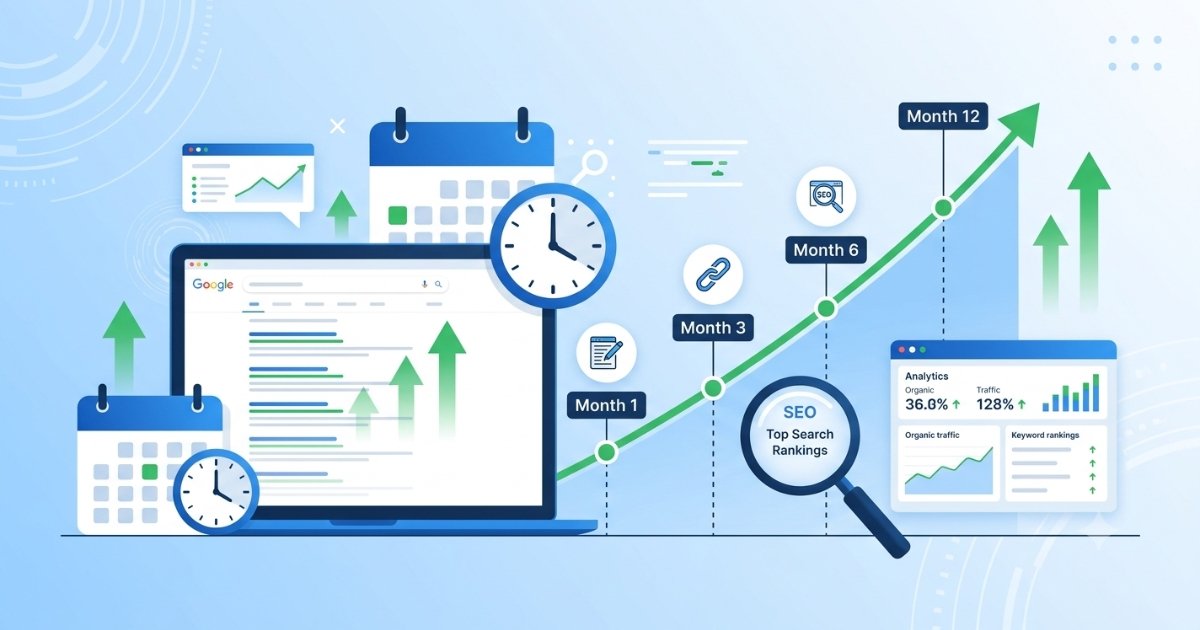
It’s one of the most common questions business owners ask before investing in SEO, and it’s a fair one. Unlike paid ads, where results show up the moment a campaign goes live, SEO takes time to build. But “it takes time” isn’t a very useful answer on its own, so let’s break down what actually happens, month by month, and why the timeline looks the way it does.
Why SEO Isn’t Instant
Search engines like Google need to discover, crawl, and evaluate your content before they trust it enough to rank it well. That evaluation isn’t a one-time event; it happens continuously, based on signals like content quality, site structure, backlinks, and user engagement. None of that can be manufactured overnight, which is exactly why SEO results build gradually rather than appearing all at once.
This is also what makes SEO fundamentally different from paid advertising. Google Ads buys visibility instantly. SEO earns it, and earning trust takes time, the same way it would with a person rather than an algorithm.
A Realistic Month-by-Month Timeline
Months 1–2: Foundation Work
This phase is mostly invisible to outsiders, but it’s the most important. It includes technical SEO audits, keyword research, fixing site structure issues, and beginning content creation. You likely won’t see ranking movement yet, and that’s normal.
Months 3–4: Early Signals
This is usually when the first signs of progress appear, new pages getting indexed, minor keyword movement, maybe a few long-tail terms cracking page two of Google. Traffic increases are typically small at this stage, but they confirm the strategy is working.
Months 5–6: Momentum Builds
By this point, well-optimized pages often start ranking on page one for less competitive keywords. Organic traffic becomes more noticeable, and you’ll usually have enough data to see which content types and topics are resonating most with your audience.
Months 6–12: Compounding Growth
This is where SEO starts to separate itself from paid channels. Rankings stabilize, traffic compounds as more pages gain authority, and the cost of acquiring an organic visitor keeps dropping since you’re not paying per click. Competitive keywords that seemed out of reach in month one often become realistic targets by this stage.
Beyond 12 Months
Mature SEO strategies keep compounding. Older content continues generating traffic with minimal ongoing investment, while new content builds on the authority already established. This is the phase where SEO’s return on investment usually outpaces paid advertising over the long run.
What Speeds Up or Slows Down the Timeline
Factors that speed things up:
- An existing website with some domain history and backlinks
- Lower competition keywords in your niche
- Consistent, high-quality content published on a regular schedule
- A technically clean site with no major crawl or indexing issues
Factors that slow things down:
- A brand-new domain with no existing authority
- Highly competitive industries like legal, finance, or insurance
- Technical issues that prevent proper indexing
- Inconsistent publishing or thin, low-value content
Why Some Businesses Give Up Too Early
The most common mistake isn’t a bad SEO strategy; it’s abandoning a good one too soon. Many businesses expect month-one results and quit around month three, right before momentum typically starts building. SEO rewards patience and consistency far more than short bursts of effort, which is why treating it as a long-term strategy, rather than a quick campaign, tends to produce dramatically better outcomes.
This is also where working with organic SEO services makes a real difference. A structured, professionally managed strategy avoids the common early mistakes, like targeting the wrong keywords or neglecting technical foundations, that quietly extend timelines for businesses trying to figure it out alone.
Setting Realistic Expectations
If someone promises first-page rankings within a few weeks, that’s a red flag rather than a good sign, since it usually means shortcuts that risk long-term penalties rather than sustainable growth. A realistic SEO timeline is measured in months, not days, and the businesses that see the strongest long-term results are typically the ones that commit to the process rather than expecting instant returns.
At XPO Outdoors, timelines are set honestly from the start, based on your industry, competition, and current site condition, so expectations match reality rather than marketing promises.
How to Track Progress Along the Way
Since results build gradually, it helps to know what to actually watch during those first several months, rather than only checking rankings and feeling discouraged. Indexed page count is a good early signal; it shows Google is actively discovering your content. Keyword position tracking matters more than raw rankings alone, since moving from position 40 to position 15 is real progress even if it isn’t page one yet. Organic traffic trends, viewed monthly rather than daily, smooth out normal fluctuations and reveal the actual trajectory. And engagement metrics like time on page and bounce rate often improve before rankings do, since they reflect whether your content is actually answering what searchers came for.
Frequently Asked Questions
1. Can SEO ever show results in under a month?
It’s possible with very low-competition, long-tail keywords, but meaningful traffic and ranking improvements for competitive terms typically take at least several months.
2. Does a brand-new website take longer to rank?
Yes, generally. New domains lack the history and backlinks that search engines use as trust signals, so they usually need more time than established sites.
3. Why did my rankings drop after a few months of progress?
Temporary fluctuations are normal as Google continues evaluating your site. Consistent, ongoing optimization typically stabilizes and improves rankings over time.
4. Is it worth doing SEO if I need faster results?
If you need immediate traffic, pairing SEO with a short-term paid strategy like Google Ads can bridge the gap while your organic rankings build in the background.
5. How do I know if my SEO strategy is actually working?
Look for gradual indicators, more indexed pages, improving keyword positions, and rising organic traffic, rather than expecting a sudden jump. Steady upward movement over months is the real sign of progress.