
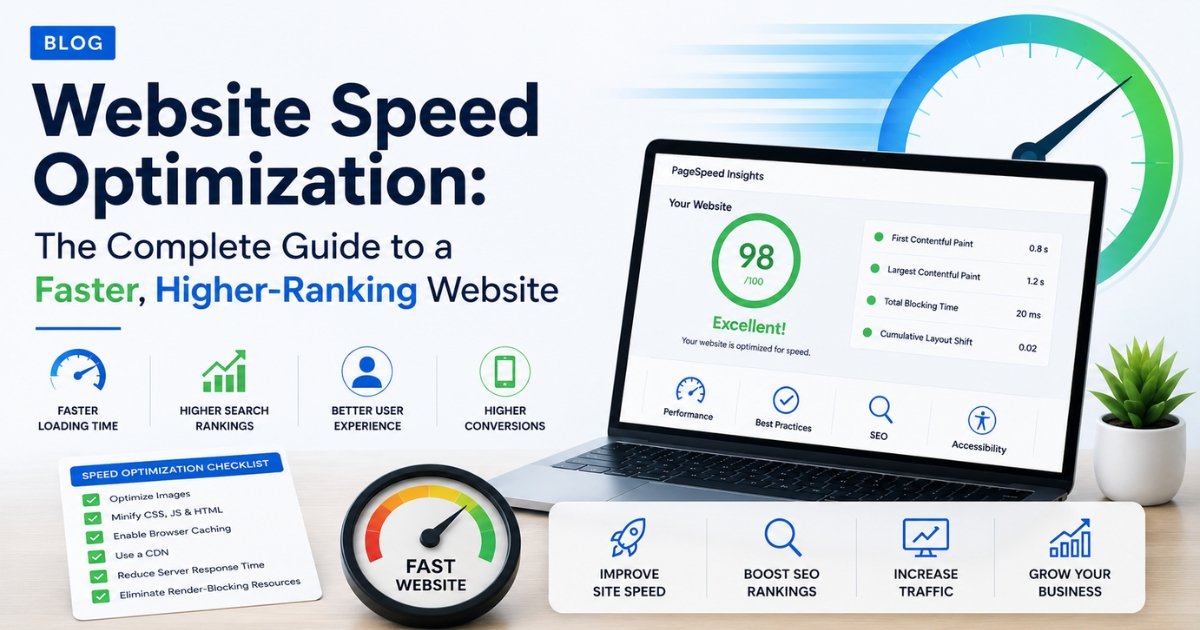
Your website has about three seconds to prove itself. If it takes longer than that to load, most visitors will simply leave. That’s the reality of running a website today, and it’s exactly why website speed optimization has become one of the most important parts of running a successful online business.
Whether you run a small blog, a corporate site, or a busy online store, page speed affects everything from your search engine rankings to how much money you make. This guide walks through what website speed optimization actually means, why it matters so much, and the practical steps you can take to make your site faster.
What Is Website Speed Optimization?
Website speed optimization is the process of making a website load faster and run more smoothly for visitors. It involves improving things like image sizes, code structure, server response time, and how a browser stores and reuses files.
The goal is simple: give people a fast-loading website no matter what device they’re using or how strong their internet connection is. This isn’t a one-time fix either. It’s an ongoing part of website maintenance that keeps your site healthy as it grows.
Why Website Speed Matters
People are impatient online, and that’s not going to change. A slow website frustrates visitors, and frustrated visitors leave. That’s where bounce rate comes in, since slower pages almost always see more people clicking away before the content even loads.
Google also pays close attention to website performance. Page speed is a ranking factor, and Core Web Vitals specifically measure how quickly and smoothly your pages load and respond. A fast website tells Google your site offers a good user experience, and that can directly influence your search engine rankings.
Benefits of Website Speed Optimization
A faster website isn’t just nice to have. It creates real, measurable business results:
- Higher search rankings through better technical SEO
- Lower bounce rate and longer time spent on your site
- Better conversion rate optimization, since visitors are more likely to complete a purchase or fill out a form
- Improved mobile page speed, which matters since most traffic now comes from phones
- Stronger overall website health and crawlability for search engines
Common Reasons Websites Become Slow
Before you can fix a slow website, it helps to understand what’s causing the problem in the first place. Some of the most common culprits include:
- Large, uncompressed images
- Too many HTTP requests from scripts, fonts, and plugins
- Poor quality hosting or an overloaded server
- Unoptimized CSS and JavaScript files
- Outdated themes or bloated page builders
- Lack of browser caching
Running a website audit is usually the fastest way to spot which of these issues is dragging down your site.
Best Ways to Improve Website Speed
Optimize Images
Images are often the biggest reason a page loads slowly. Compressing files and switching to WebP images can shrink file sizes significantly without hurting quality.
Enable Browser Caching
Browser caching lets a visitor’s browser store parts of your site locally, so repeat visits load much faster. This is one of the simplest website speed improvements you can make.
Minify CSS & JavaScript
Code minification strips out unnecessary characters and spacing from your files. It sounds small, but it reduces loading time across your entire site.
Use Lazy Loading
Lazy loading delays images and videos below the fold until a visitor actually scrolls to them. This cuts down initial load time without removing any content.
Improve Hosting
Quality hosting affects server response time more than almost anything else. If your hosting plan is outdated or overcrowded, no amount of front-end optimization will fully fix things.
Use a CDN
A CDN, or content delivery network, stores copies of your site across servers worldwide. This means visitors load your pages from a server near them instead of one far away.
Reduce HTTP Requests
Every script, font, and plugin adds another request your browser has to make. Trimming unnecessary ones speeds up the whole page.
Optimize Database
For sites built on WordPress or similar platforms, a cluttered database can slow things down behind the scenes. Regular cleanup keeps things running smoothly.
Mobile Optimization
A responsive website that adjusts properly to phones and tablets is no longer optional. Mobile optimization directly affects both user experience and rankings.
Tools like Google PageSpeed Insights, Lighthouse, and GTmetrix are great for running a website speed test and tracking your progress. They also give a clear website performance audit with specific fixes.
Website Speed and SEO
Search engines want to send people to pages that load fast and work well. That’s why website speed optimization is now a core part of technical SEO, not a side project.
A fast website improves crawlability and indexing, since search engine bots can move through your pages more efficiently. Combine that with strong SEO performance elsewhere on your site, and you have a much stronger foundation for ranking well over time.
Website Speed for Ecommerce Businesses
Online stores feel the impact of page speed more than almost any other type of site. A slow-loading product page or checkout process leads directly to lost sales.
This is where ecommerce website development becomes so important. Every extra second of load time during checkout increases the chance a customer abandons their cart. For stores built on Shopify, shopify website development that focuses on speed and clean code can make a noticeable difference in both bounce rate and sales.
Good ecommerce website design services always factor performance in from the start, rather than trying to fix it after the site is already built.
Why Professional Website Development Matters
Website speed optimization works best when it’s built into the foundation of your site, not added as an afterthought. This is why so many businesses turn to professional website development instead of trying to patch things together on their own.
Proper website design and development services combine clean code, quality hosting, and ongoing website security with a design that actually performs well. Custom website development services allow a site to be built around your specific business needs rather than a generic template.
If you’re searching for a website design company near me, look for one that understands seo website design as part of the process, not something added later. Corporate website design especially benefits from this approach, since larger sites tend to have more moving parts that can slow things down if not planned carefully.
Performance optimization services from an experienced team can also handle ongoing maintenance, keeping your site fast as browsers, plugins, and traffic patterns change over time.
Final Thoughts
Website speed optimization touches nearly every part of running a successful website, from search rankings to sales to how visitors feel about your brand.
The good news is that most speed problems have clear, practical fixes once you know where to look.
Start with a website speed test, tackle the biggest issues first, and treat speed as an ongoing part of website maintenance rather than a one-time project. Whether you handle it yourself or partner with XPO Outdoors, investing in a faster website pays off in almost every part of your business.